
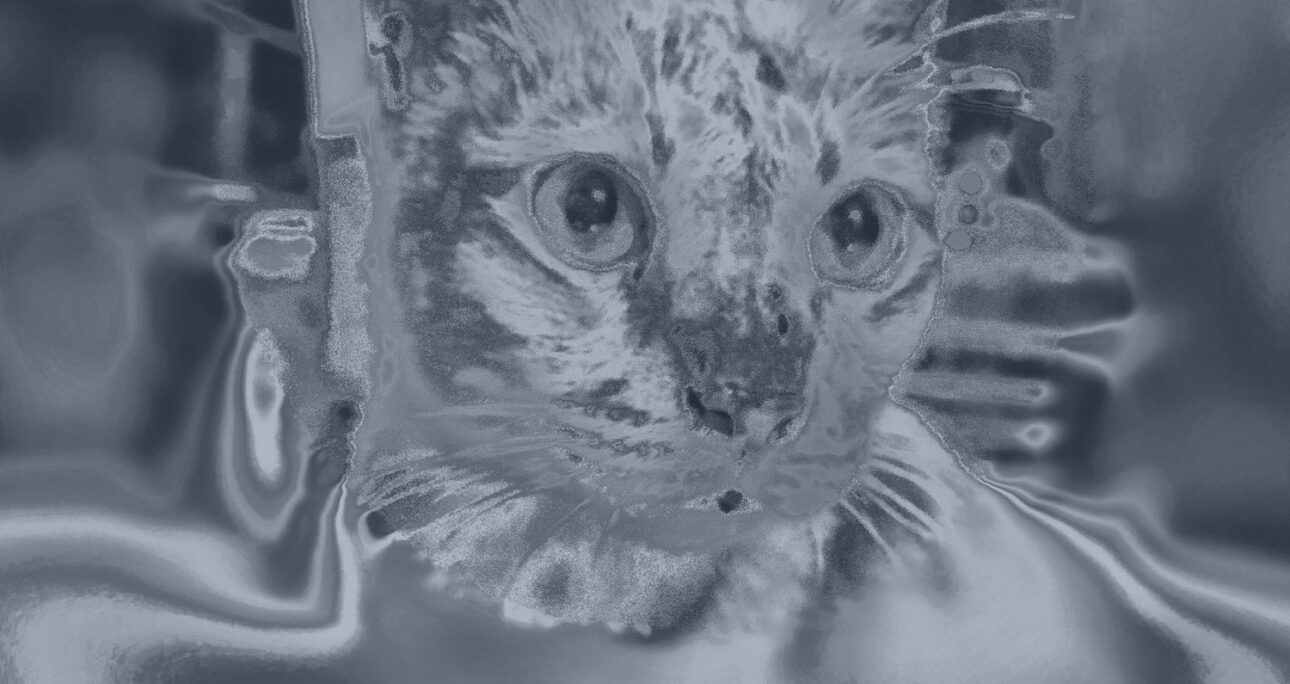
In recent years, a quiet revolution has been unfolding in design—a move away from flat minimalism toward something more surreal, sensorial, and spiritual. Psychedelic and transcendental aesthetics, once confined to art movements and counterculture, are now influencing the way we interact with digital products, brands, and even our sense of self.
In an era saturated by utility and optimization, a strange and beautiful aesthetic shift is taking place. Designers and digital creators are reaching beyond minimalism, diving into the surreal, the spiritual, the ineffable.
We are witnessing a renaissance of psychedelic and transcendental design—a visual language rooted not in clarity, but in complexity; not in control, but in surrender.
From glowing orbs to celestial gradients, from fluid motion to sacred geometries, cosmic visuals to dream-like animations and interfaces inspired by altered states, these aesthetics are more than trends. They are symptoms of a cultural longing—for emotion, for mystery, for altered perception in an overstimulated, over-digitized world.
But what’s really behind it—and what does it say about us?
1. The Return of Emotion and Mystery in Design
For over a decade, digital design has been shaped by the rationalism of flat UI and user-centered logic. Clean lines, neutral palettes, and frictionless flows became the norm—efficient, accessible, and polite.
But users today aren’t just navigating tools. They’re seeking experiences that feel meaningful, sensorial, and alive.
Psychedelic and transcendental aesthetics mark a departure from the sterile and toward the sacred:
- Color as emotion: Vivid gradients and color distortions evoke altered states of mind.
- Form as flux: Organic, morphing shapes simulate transformation, inviting flow over fixation.
- Symbol as myth: Sacred geometries, portals, and cosmic iconography hint at inner journeys and universal archetypes.
These designs don’t just ask, “Is it usable?” They whisper, “Is it felt?”
2. Influences from Psychedelic Culture and Spiritual Tech
As psychedelics are slowly being de-stigmatized in wellness and therapy spaces, their visual culture is bleeding into mainstream design. Apps, websites, and branding now borrow from:
- Trip-inspired color palettes: vivid gradients, luminous overlays, color distortions
- Organic, morphing shapes: simulating the feeling of movement or transformation
- Sacred and cosmic symbolism: moons, eyes, chakras, fractals, and portals
- Soothing, ambient sounds and microinteractions: enhancing sensory immersion
These choices aren’t just aesthetic—they reflect deeper cultural trends: a longing for healing, altered states, and meaning in a hyper-digital world. The return to psychedelic aesthetics is not just cultural—it’s also technological.
Generative AI has destabilized authorship. It produces infinite variations, derivative styles, and uncanny precision. In this context, aesthetics that reference the ineffable—the dream, the trance, the vision—carry new weight.
Because AI can simulate logic. It can even simulate beauty. But it cannot simulate the sublime.
Psychedelic and transcendental aesthetics resist the machine’s gaze. They speak not in facts, but in feelings. Not in solutions, but in suspensions.
They offer what the algorithm cannot: depth.
3. How These Aesthetics Influence Behavior and Consumption
This new aesthetic economy is not just visual—it’s psychological and spiritual — it affects how people feel about a product
- A focus app mimics a mushroom trip with fluid animations and binaural beats
- A meditation startup uses sacred symbols to evoke ancient wisdom
- A journaling tool employs dream-like visuals to suggest inner journeys
Apps, platforms, and brands are no longer selling products. They’re selling presence.
- Calm and connection: Soft gradients, nature-inspired patterns, and fluid motion can promote relaxation—often used in meditation, journaling, or focus apps.
- Mystique and elevation: By hinting at “higher” experiences, products position themselves as more than tools—they become rituals, guides, or even gateways to self-discovery.
- Aesthetic intimacy: These visuals feel personal, almost sacred—helping users form emotional bonds with products or brands.
These experiences operate at the intersection of design and ritual. Interfaces become liturgies of daily interaction. Users don’t just use them—they submit to them.
This is where it gets ethically complex.
Because the aesthetics of transcendence can be used to invite healing—or to cloak manipulation.
But here’s the paradox: mysticism is being commodified. What once aimed to dissolve ego is now used to sell subscriptions. This raises ethical questions—especially when transcendental aesthetics are used to suggest healing or enlightenment without real depth.
4. The Danger of Selling Illusions
There’s a fine line between inspiration and manipulation. When psychedelic or spiritual visuals are used purely as aesthetic bait, they risk trivializing the very experiences they imitate.
- Does a glowing orb really offer mindfulness—or just a dopamine hit?
- Is the product guiding transformation—or reinforcing digital addiction with prettier animations?
- Are we consuming transcendence—or just branding it?
When transcendental aesthetics are deployed in digital design, they bring both promise and peril.
Promise: They can invite moments of reflection, foster emotional intimacy, and offer sensory reprieve from information fatigue.
Peril: They can be used to aestheticize manipulation, promote escapism, or commodify spirituality.
We must ask:
- Is the design helping the user encounter themselves—or evade themselves?
- Is the mysticism symbolic—or instrumentalized?
- Does the product earn its aesthetics—or merely wear them?
Designers must move beyond aesthetic surface and ask: what is the psychic cost of the interface we’re creating?
5. Designing for Real Depth
When used thoughtfully, these aesthetics can do something beautiful: remind us that digital products can feel human, imaginative, and even sacred. If we are to design with psychedelic and transcendental aesthetics, let it not be a pastiche.
Let it be a response to the deep spiritual dislocation of contemporary life. Let it be a way of crafting interfaces of inner space, where:
- Motion is used to invite breath
- Color becomes emotional language
- Symbol becomes shared myth
- Ambiguity becomes a form of care
This is not about returning to some imagined past or mimicking a shamanic aesthetic. It is about designing for liminality—for spaces where transformation is possible.
As machines become better at generating content, we must become better at curating meaning.
Ok, so final thoughts
Psychedelic and transcendental aesthetics signal more than a stylistic wave. They reflect a cultural yearning—a collective ache for depth, ambiguity, and metaphysical texture in an era of flattened meaning.
They challenge designers to move beyond clarity, toward care.
Beyond optimization, toward orientation.
Beyond pixels, toward presence.
In a world where AI generates endless surfaces, our role is not to out-create the machine—but to make meaning within the machine’s output. To design experiences that honor complexity, cultivate awareness, and touch the poetic dimension of being.
The interface, it turns out, is not just a tool.
It’s a mirror.
A myth.
A medium of inner light.